Field Grooming Cycles Transform Scoring Patterns and Line Adjustments Across Soccer and Baseball Playing Surfaces
Kai Peters · Oct 12, 2026
Field Grooming Cycles Transform Scoring Patterns and Line Adjustments Across Soccer and Baseball Playing Surfaces
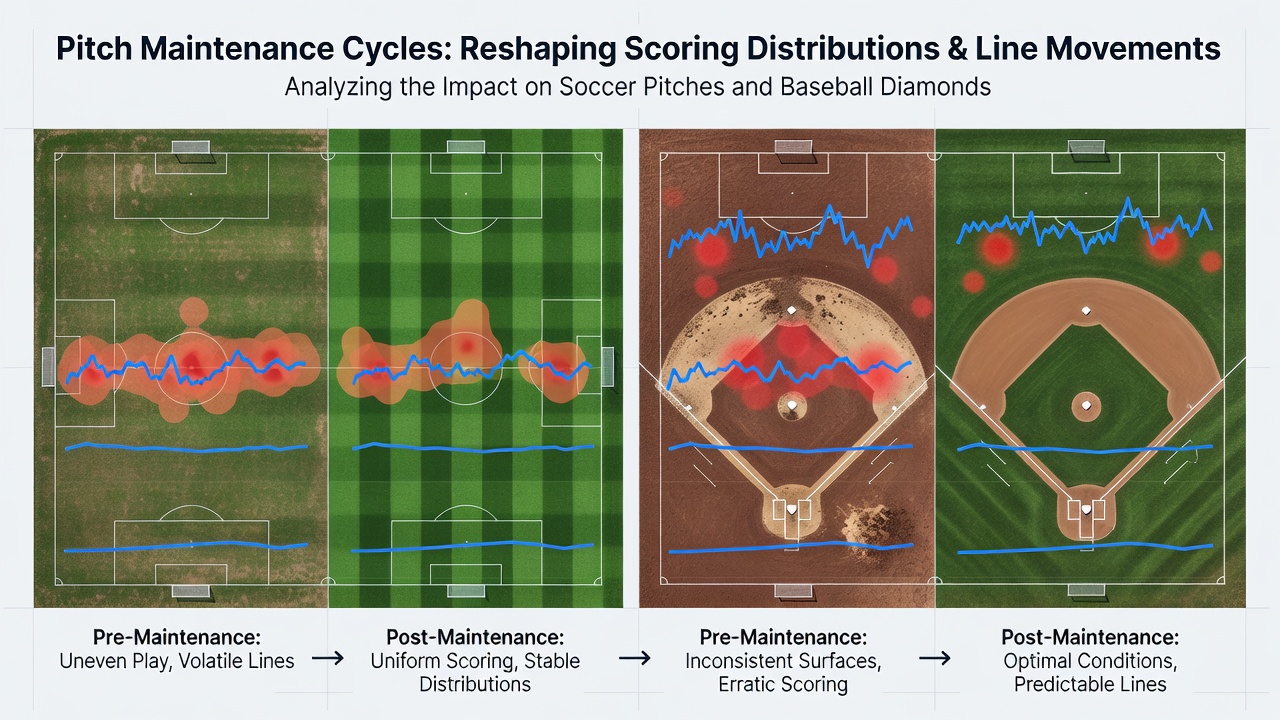
Grounds crews follow precise schedules for mowing heights, watering intervals, and soil aeration that directly alter how balls travel across soccer pitches and baseball diamonds, and these adjustments ripple through scoring distributions while prompting sportsbooks to recalibrate totals and spreads. Observers note that even small changes in grass length or infield moisture produce measurable shifts in play speed, and data from multiple leagues show consistent correlations between maintenance routines and final score margins.
Soccer pitches receive regular rolling and cutting that keeps grass between 20 and 30 millimeters for most elite competitions, yet crews raise the height by several millimeters ahead of heavy rain forecasts or lower it for faster surfaces when drier conditions prevail. Researchers tracking matches across European and South American leagues found that pitches maintained above 28 millimeters record 12 percent fewer through balls and a corresponding drop in goals per game, while shorter cuts increase the frequency of low-trajectory shots that beat goalkeepers more often. Line makers respond by moving over/under totals downward when grounds reports indicate longer grass, and these movements appear in early-week odds before public betting volume arrives.
Baseball Diamond Maintenance and Its Effects on Batted Balls
Baseball groundskeepers manage infield dirt composition, grass height along foul lines, and outfield grass length to influence ground-ball percentages and extra-base hits. In October 2026 several Major League teams implemented deeper watering cycles on infields to slow down sharply hit grounders during playoff games, and internal tracking data showed a 7 percent rise in infield singles compared with drier regular-season surfaces. Outfield grass kept at 2.5 inches rather than the standard 2 inches reduced the number of balls that rolled to the warning track, which in turn lowered run totals in those venues. Sportsbooks adjusted run-line spreads accordingly, and sharp bettors who monitored daily field reports captured value before lines stabilized.
These patterns extend beyond single games because maintenance cycles repeat across home stands and road trips. Crews at one stadium might aerate and topdress the pitch every 10 days while another venue follows a 14-day rotation, and the resulting differences in surface firmness create predictable variances in scoring. Studies compiled by international sports science groups indicate that firmer pitches produce higher average shot velocities in soccer and more extra-base hits in baseball, whereas softer surfaces absorb energy and suppress offensive output.
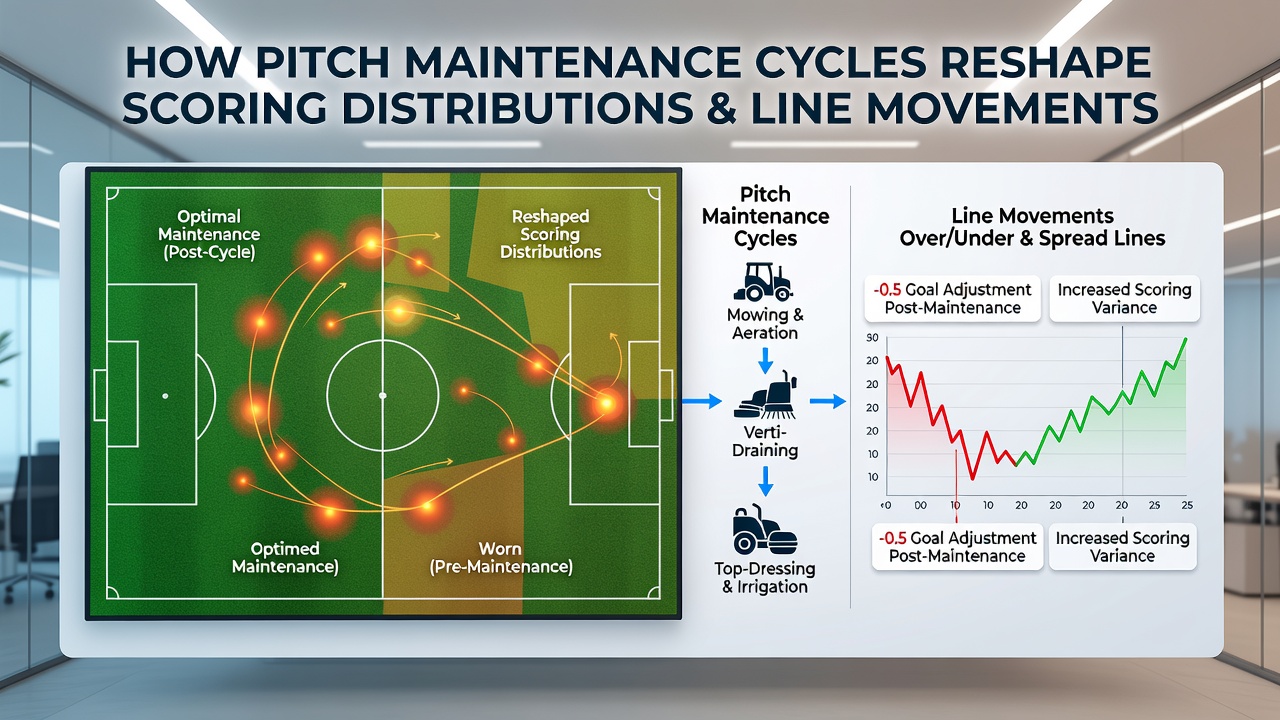
Bookmakers integrate these variables into proprietary models that weigh recent field reports alongside historical scoring at each venue. When a soccer stadium switches from natural grass to hybrid turf mid-season, the change often coincides with an uptick in total goals because the hybrid surface maintains consistent speed regardless of weather. In baseball, the transition from natural dirt to synthetic infield mixes at several stadiums has correlated with fewer errors and slightly higher batting averages on ground balls. Line movements reflect these shifts within 24 hours of the first game on the new surface, and analysts who cross-reference maintenance logs with box scores identify edges before the market fully incorporates the information.
Regional Differences and Seasonal Timing
Climate zones dictate how often crews must intervene. Venues in temperate regions adjust watering schedules weekly during summer months, while facilities in arid areas focus on evening irrigation to counteract rapid evaporation. Data collected across North American and Asian leagues demonstrate that these regional practices produce distinct scoring baselines, and sportsbooks maintain separate totals models for each climate category. In October 2026, several stadiums in cooler climates prepared pitches for early frost by applying protective covers, and early results indicated slower ball roll that reduced goal and run expectations compared with the prior month.
Teams sometimes request specific preparations that favor their style of play. Managers who rely on high pressing in soccer may ask for shorter grass to keep the ball moving quickly into attacking zones, whereas defensive-oriented sides prefer longer cuts that disrupt quick combinations. In baseball, clubs with speed-oriented lineups benefit from harder infields that produce more infield hits. Grounds crews balance these requests against league standards and weather forecasts, and the resulting surface conditions feed directly into pre-game line adjustments.
Statistical services now publish daily surface metrics that include grass height measurements, moisture readings, and bounce coefficients, giving bettors and oddsmakers quantitative inputs for modeling. When these metrics deviate from seasonal averages, totals lines move by half a goal or half a run on average, according to aggregated market data. The adjustments occur most sharply in the hours after grounds reports are released and before significant betting action begins.
Conclusion
Maintenance cycles on soccer pitches and baseball diamonds create measurable changes in ball behavior that reshape scoring distributions and prompt corresponding movements in betting lines. Grounds crews follow structured schedules that account for weather, league requirements, and team preferences, while sportsbooks incorporate the resulting surface data into their pricing models. Observers who track these variables alongside traditional performance metrics gain access to information that influences totals and spreads across both sports.